
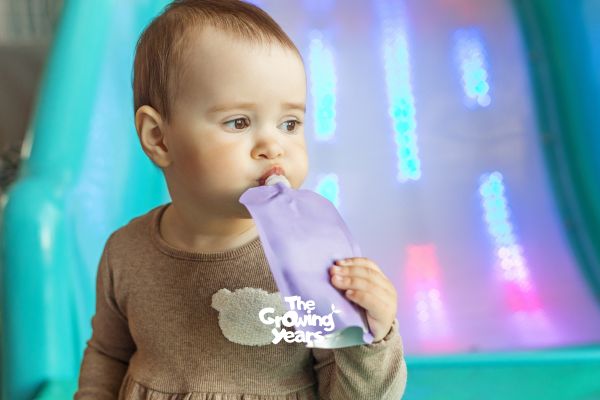
Are Baby Food Pouches Healthy? How to Read the Label in 10 Seconds
Walk down the baby aisle and every pouch on the shelf is telling you the same story. Organic. Natural. Full of fruit and vegetables. No added sugar. A little cartoon character and a colour scheme designed to feel wholesome.
Most of them are not what they appear to be.
I want to be fair here, because I think the conversation around pouches often gets moralistic in a way that is not helpful. Pouches are convenient. They are in the nappy bag for a reason. Parents are not failing when they use them.
But they are one of the most heavily marketed products in the entire baby aisle, and the marketing is doing a lot of work that the ingredient list does not support.
The core problem
Three things go wrong with most pouches.
They are high in sugar. Not added sugar, usually. Fruit sugar. When apple or pear puree makes up the bulk of the product, you have a sweet food, regardless of what the front of the pack says about vegetables.
They are low in iron. This is the one that actually matters. Iron is the single biggest nutritional reason solids begin around six months. A fruit dominant pouch delivers almost none of it. If pouches are making up a meaningful part of your baby's intake, iron is very likely being displaced rather than delivered
They build habits you later have to undo. A baby who is regularly served sweet, smooth food develops a preference for exactly that. Vegetables, meat and mixed textures are then harder to introduce, not easier. Sucking from a spout also does nothing for the oral motor development that comes from chewing and managing texture.
Fruit is not the enemy. Fruit is wonderful. But fruit puree as a meal is a sweet snack pretending to be dinner.
The one rule
Turn the pouch over. Ignore the front entirely.
If fruit appears in the first two ingredients, it is a high sugar, low iron product. It is not a meal.
That is it. That is the whole test, and it takes about ten seconds.
You will be surprised how many pouches marketed as savoury vegetable meals have apple or pear sitting at the top of the list. Apple puree is cheap, it is sweet, and it makes anything palatable. That is why it is there.
What a genuinely good pouch looks like
They do exist. Here is what to look for.
Meat, lentils or legumes in the first two ingredients. This is the marker of a product that is actually contributing protein and iron.
Sugar under 5g per 100g. Check the nutrition panel, not the claims.
No fruit juice concentrate. This is added sugar wearing a health food costume. If it is on the list, put it back.
If a pouch clears those three, it is doing a reasonable job.
How to use pouches well
Assuming you have found a decent one, a few things make a real difference.
Squeeze it onto a spoon or into a bowl. Do not let your baby suck it straight from the spout as a matter of routine. Feeding from a spoon or, better, letting them explore it themselves, keeps the eating experience where it should be. The pouch was designed for the parent's convenience, not the baby's development.
Add something to it. A pouch is a base, not a finished meal. Stir in a spoon of full fat yoghurt, some grated cheese, a little olive oil, or, if you are being properly useful about it, some finely shredded meat. You have just turned a mediocre product into a reasonable one.
Keep them for the situations they are actually for. The car. The appointment that ran long. The day that went sideways. Not the default lunch.
Serve texture separately. If a pouch is on the menu, put something on the tray alongside it that requires chewing. A soft strip of vegetable, a piece of toast, a slice of cheese.
The honest position
If your baby has been living on pouches, nothing has gone wrong and there is nothing to panic about. Babies are resilient, and the window for building good habits is not a door that has closed.
But if you are choosing between a pouch that leads with apple and one that leads with lamb and lentils, that choice takes ten seconds and it genuinely matters.
Flip it over. Read the first two ingredients. Decide from there.
Want to get iron right from the very first meal?
The First Foods Confidence Kit covers exactly this. The First Foods Essentials Guide walks through the nutrients that matter most and why. There is a Grocery Shopping List by Stage so you know what to have in the fridge, a 6 to 9 month feeding schedule, and a full recipe library so you are not relying on the baby aisle at all.
16 resources. Instant download. $47 AUD.